If your air conditioner seemed to handle spring just fine and suddenly can’t keep up in July, you’re not imagining things. Peak summer heat in Fort Smith is a different animal. When temperatures push into the upper 90s and humidity makes it feel like you’re breathing through a wet towel, your AC system is running harder, longer, and under more stress than it was designed to handle every single day. That doesn’t always mean something is broken, but it does mean the signs your system is sending you deserve attention.
Here’s what’s actually happening inside your home’s cooling system when the Arkansas summer hits full stride, and what you should do about it before a slow struggle turns into a complete breakdown.
Your AC Was Sized for Average Demand, Not a Heat Wave
Every AC system is sized to handle a home’s typical cooling load. During an extended heat wave — the kind Fort Smith sees regularly from late June through August — outdoor temperatures can exceed the design parameters your system was originally engineered around. The result: your unit runs almost continuously and still can’t hit your thermostat setpoint.
This isn’t always a failure. Sometimes it’s physics. But there are factors that make it worse, and most of them are fixable.
5 Reasons Your AC Can’t Keep Up Right Now
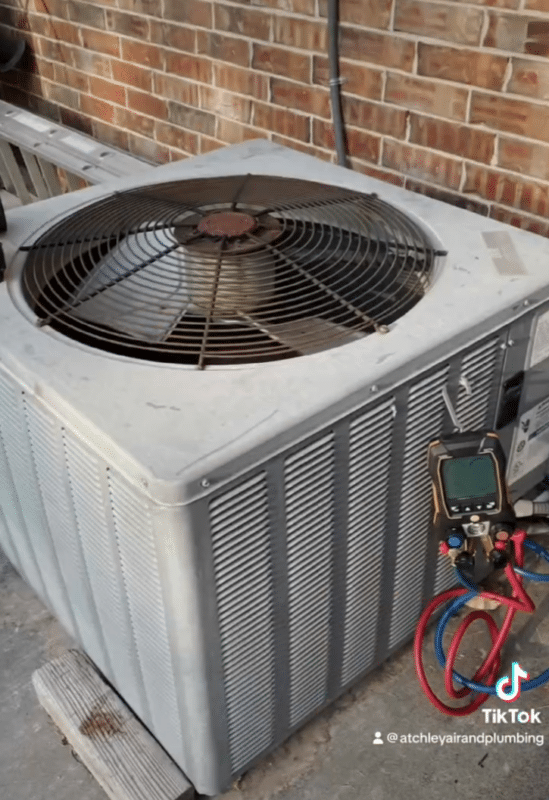
1. A Dirty or Clogged Condenser Coil
Your outdoor unit works by pushing heat out of your home into the outside air. When the coil is caked with dirt, cottonwood seed, grass clippings, or debris — and it almost certainly is by mid-summer — that heat transfer becomes seriously inefficient. The system works harder to accomplish less, and your electric bill climbs while your comfort drops.
What to do: Turn off the unit and gently rinse the coil fins with a garden hose from the inside out. If it’s been more than a year since a professional cleaned it, schedule a tune-up. Atchley Air’s AC Tune-Up includes a thorough coil cleaning and full system check, currently available for $69 (regularly $119).
2. Low Refrigerant
Refrigerant doesn’t get used up like gasoline, but it does leak. A slow refrigerant leak that went unnoticed in the spring can become obvious in July when your system is running nonstop and still pushing lukewarm air. Signs include ice buildup on the refrigerant lines, a hissing or bubbling sound near the indoor unit, and warm air from the vents despite a cold thermostat setting.
What to do: This requires a licensed technician. Refrigerant handling is regulated, and topping off a system without finding and repairing the leak is just a temporary fix. If you’re seeing these signs, call before the coil freezes over entirely and you lose cooling for a day or more.
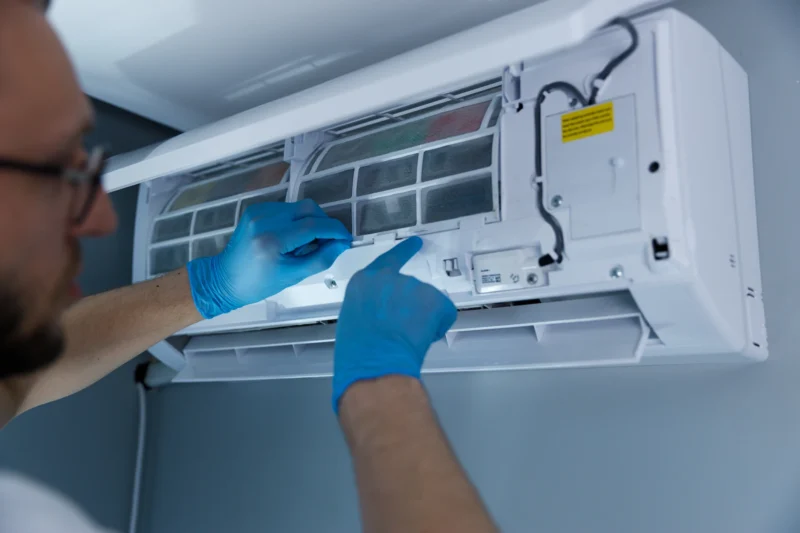
3. A Restricted or Filthy Air Filter
This is the one homeowners most often overlook, and the one that causes the most avoidable service calls. During peak season, when your system runs 12 to 16 hours a day, a filter that might last three months in spring can clog up in four to six weeks. A clogged filter starves your system of airflow, which strains the blower motor, reduces efficiency, drives up humidity, and can cause the evaporator coil to freeze.
What to do: Check it now. If it’s gray and solid, replace it. During peak summer months, check your filter every 30 days regardless of what the packaging says, especially if you have pets or anyone in the home with allergies. Your indoor air quality improves directly alongside your system’s efficiency.
4. Duct Leaks and Poor Insulation
If you have rooms that are noticeably hotter than others, or if your system runs endlessly without hitting your target temperature, leaky ductwork is a likely culprit. In summer, attics in Fort Smith homes can reach 130 to 150 degrees Fahrenheit. If your ducts run through that space and aren’t properly sealed and insulated, you’re essentially pumping cold air through an oven before it reaches your rooms.
What to do: A professional duct inspection can identify whether sealing or insulating your duct system would meaningfully improve performance. Atchley Air offers air duct cleaning and inspection services, a good starting point if you’ve never had it done or it’s been more than three to five years.
5. An Aging System Running Past Its Prime
A 12 to 15 year old AC system that’s maintained and runs fine in mild weather may simply not have the capacity to keep up when it’s 98 degrees outside. Compressors lose efficiency over time. Older refrigerants are less effective. And systems from that era weren’t built to today’s efficiency standards.
If your unit is more than 12 years old, requires repairs more than once per season, or is driving up your electric bill noticeably compared to neighbors with newer systems, it’s worth having an honest conversation about replacement versus repair. Atchley Air carries Lennox systems as a Premier Dealer, and with current financing offers including 0% interest for 72 months on select new AC systems (with approved credit), the math on replacement may be better than you think. See our current offers.
What Peak Summer Temperatures Do to Your System, Hour by Hour
Most people think about their AC as something that either works or doesn’t. The reality is more gradual. On a 100-degree day in the River Valley, here’s what’s happening:
- Morning: Your system starts the day already behind if it had to run overnight. Indoor temperatures may never have fully recovered from the day before.
- Midday: Solar gain through windows and a roof that’s been baking for six hours adds significant load. Your system is working hardest between noon and 4 PM.
- Late afternoon: This is when most stress failures happen. Capacitors and compressors that have been running hot all day are most likely to give out between 3 and 6 PM, the same window when technicians are most in demand.
- Evening: Even after sunset, outdoor temps stay warm long enough that your system may not get meaningful relief until after 9 or 10 PM.
The lesson: don’t wait until something fails on the hottest afternoon of the year. That’s when every HVAC company in Fort Smith has a full truck schedule and a long wait list.
When to Call and When to Call Fast
Some mid-summer AC issues can wait a day or two for a scheduled appointment. Others can’t.
Schedule soon:
- Rooms that won’t cool below 80 degrees despite a 72-degree setpoint
- Utility bills that spiked 25% or more without explanation
- System cycling on and off in short bursts
Call for emergency service:
- No cooling at all, especially with elderly family members, infants, or pets in the home
- Ice on refrigerant lines or the indoor unit
- A burning or electrical odor from any part of the system
- Tripped breakers that won’t reset
Atchley Air offers emergency AC repair for situations that can’t wait. Don’t tough it out — extreme indoor heat is a genuine health risk.
Beat the Heat with Atchley Air
Your AC working harder in peak summer heat is normal. Your AC failing to keep up, making strange noises, or driving your electric bill sky-high is not something to wait out. Most mid-season breakdowns have a warning period, and the homeowners who catch them early save both money and comfort.
If your system has been struggling, an Atchley Air technician can diagnose what’s actually happening and give you straight answers about whether a repair, tune-up, or replacement makes the most sense for your situation.
Call us at 479-207-6862 or schedule online today. Don’t wait until the hottest day of the year to find out your system can’t handle it.